Every day, we scroll, click, tap, and decide within seconds. Some content feels easy to understand. Some feels confusing, even when the message is simple. That difference usually comes down to visual communication design.
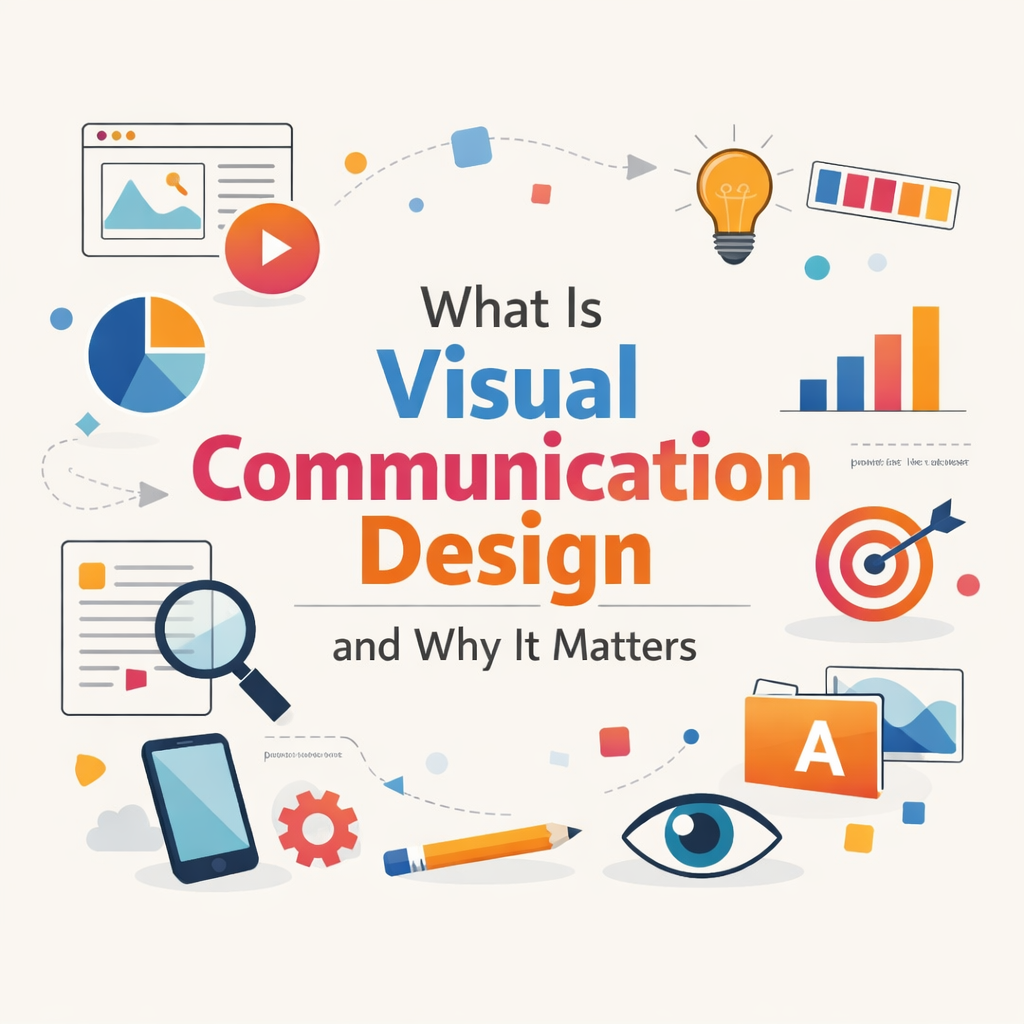
Visual Communication Design is how ideas are shared using visuals like layout, colors, fonts, images, icons, and spacing. It helps people understand information quickly without feeling overwhelmed. Instead of reading long explanations, people can grasp meaning just by looking.
You may not always notice it, but visual communication design shapes how brands are seen, trusted, and remembered.
What visual communication design really means in simple words
Visual communication design means arranging visual elements in a way that feels clear and natural. It focuses on how information is shown, not just what is said.
Designers think about how people read screens. Most people scan first and read later. Because of this, headings, spacing, and visual balance matter a lot. When content feels organized, people feel comfortable staying and exploring.
Good visual communication design makes information feel easy, even when the topic is complex.
How visual communication design helps people understand faster
The human brain processes visuals faster than text. Colors signal importance. Size shows priority. Spacing separates ideas. These elements guide attention without effort.
When visual communication design is done well, people do not search for meaning. They know where to look and what to focus on. This makes reading, learning, and decision making smoother.
That clarity is the reason visuals play such a strong role in modern communication.
Where visual communication design is used in everyday life
Visual communication design is part of daily digital life. Websites rely on it for navigation. Mobile apps use it to guide actions. Social media content depends on it to catch attention quickly.
Brands also use visual communication design in digital marketing, email campaigns, online ads, packaging, presentations, and online stores. Even simple things like menus, signs, and dashboards depend on visual structure.
Anywhere information needs to be clear, visual communication design is working in the background.
Why visual communication design matters for branding
Brand recognition grows from consistent visuals. Fonts, colors, layouts, and image styles create a familiar look. When people see the same visual language again and again, recognition happens naturally.
Visual communication design also affects trust. Clean and organized visuals feel professional. Inconsistent design often creates doubt, even when the message itself is strong.
This is why branding relies heavily on visual communication design across every platform.
How visual communication design improves user experience
User experience improves when design reduces effort. Clear headings help scanning. Readable text reduces strain. Balanced spacing makes content feel calm.
Visual communication design also supports accessibility. Good contrast improves readability. Simple icons help understanding. Clear layouts work better across different screen sizes.
When users feel comfortable, they stay longer and engage more.
Visual communication design and digital marketing growth
Visual communication design supports digital marketing by making messages easy to consume. Ads perform better when visuals explain the idea quickly. Landing pages work better when layouts guide attention naturally.
Search engines also respond to user behavior. Pages that feel easy to read keep users engaged. Clear structure supports featured snippets, AI search answers, and zero-click results.
Strong visuals help content stand out in crowded digital spaces.
Small design choices that change how people feel
Line spacing affects reading speed. Alignment affects trust. Color contrast affects focus. These details may seem small, but together they shape the entire experience.
When design feels uncomfortable, users often leave without knowing why. Visual communication design focuses on these details to keep everything smooth and readable.
Skills behind visual communication design
Visual communication design starts with planning. Designers understand the audience, the message, and the goal before creating visuals.
Typography improves readability. Color supports hierarchy. Layout creates flow. Design tools help apply these choices consistently.
Clear thinking always comes before visual execution.
When visual communication design needs improvement
Design updates are needed when users struggle to navigate, engagement drops, or branding feels outdated. Digital habits change, and visuals need to keep pace.
Sometimes small changes in spacing, font size, or layout can improve clarity immediately.
Why visual communication design matters for businesses
Visual communication design helps businesses communicate clearly. Customers understand messages faster. Brand recognition improves. User experience feels smoother.
Clear visuals reduce confusion and save time. Marketing performs better when attention flows naturally. Teams also explain ideas more easily using visuals.
This makes visual communication design a practical part of business growth.
Final thoughts
Visual Communication Design helps people understand ideas without effort. It supports branding, user experience, and digital growth by keeping communication clear and natural.
If your brand message feels unclear or your visuals do not reflect your quality, it may be time for a fresh perspective. Creative Alif helps businesses turn ideas into clear, confident visual communication that connects instantly. Let’s create visuals that make people stay, understand, and take action.